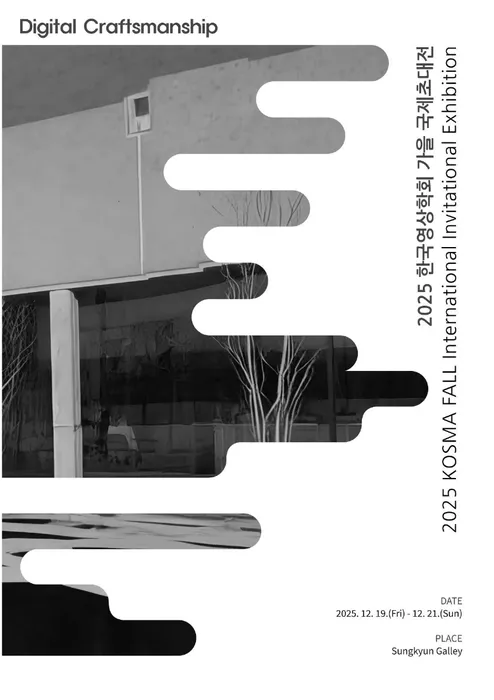
Exhibited · KOSMA 2025
Topology Unknown
- Artifact
- Single-channel video · 05:05
- Year
- 2025
- Exhibition
- Digital Craftsmanship · KOSMA
- Venue
- Sungkyun Gallery, Sungkyunkwan University
- Dates
- 19–21 December 2025
Final artifact
The exhibited work is the complete video demonstration.
The screen recording shows the game running in real time as player input influences AI computation and the continuously generated landscape.
Topology Unknown · 2025 · single-channel video · 05:05 · web viewing derivative
Companion materials
Full NTRO report
Topology Unknown
Nhat Pham Hong, Agnieszka Kiejziewicz, Ricardo Arce and Kok Yoong Lim · RMIT University Vietnam
Background
The AI’s latent space “black box” nature and its emergent property are the result of the interpolation of many dimensions of data, considering algorithmic opacity as a medium itself, materialising what AI can hide, reveal, and process. Such emergent AI “hallucination” creates “uncanniness”: the feeling of being challenged by something beyond ordinary understanding, where the output teeters between the edge of the known and unknown, bridging discoveries, modes of computer/AI-human interaction, and creative expressions. Recent scholarship and technical implementation of AI within the game design practice show that AI’s emergent property is underutilised creatively (Ping & Dingli, 2020; Srivastava, 2024). Using play and uncanniness as the communication and interface bridging humans and computer/AI, this project questions the implications of the triad game designer/player/computer’s agency and challenges the traditional game map/level design principles and processes resulting from such interactions.
Research contribution
Topology Unknown is a video representation of an AI-driven experimental game prototype in which the player takes on the role of an explorer on the AI’s black-box expedition to traverse and map this uncanny, unsolvable multidimensional landscape. Unlike traditional first-person view games and traditional generative game map design, where the map is persistent and constant once generated, Topology Unknown’s world is unstable, abstract, and continuously generated by AI, with the player’s controls directly influencing how the AI generates the landscape in real time. This pioneering solution is achieved by mapping players’ movements to AI’s latent-space walk technique (Schaerf, 2024), driven by AI’s emergent properties. Therefore, the AI landscape will never be the same when viewed from different angles, moments, or play sessions: no two players will experience the same visuals and landscape. The project demonstrated a unique creative approach to AI implementation that combined technical practice and theoretical exploration, driven by uncanniness as understood through Freud’s perception of the Unheimlich as a return of the familiar in defamiliarised form (Bartnæs, 2009).
Research significance
The project explored the underutilised AI’s emergent property in creative work, while expressing the timely sentiment of digital craftsmanship and critically engaging with AI as a creative medium in response to the disruptive generative AI landscape. By introducing AI emergence into the generation of game worlds, it challenges traditional game design principles by distributing agency, which used to be the sole domain of the game designer, to the triad of designer/player/AI. This approach produces conversational play with further possibilities of researching human-machine connections through playful acts (Kac, 2004). In this context, embracing uncanny affordances as the introduction to the interpretative act of communication, rather than defects, expands possible pedagogical approaches to game aesthetics.
The video is an outcome of the research project Emergent Play, funded by the School of Communication and Design’s 2025 School Research Seed Funding.
Significance of the exhibition
The video was exhibited at the curated exhibition 2025 KOSMA Fall International Invitational Exhibition: Digital Craftsmanship (19–21 December 2025 in Seoul, Korea). KOSMA has a long-established reputation as a credible platform for the dissemination of research generated within the international scholarly community. With the selected theme, the exhibition expanded its reach to include 45 artworks from 8 countries. The introduction of a peer-reviewed submission process ensured the quality and integrity of the showcased works. This event also included interdisciplinary conversations and cross-cultural exchanges, bringing together creators, educators, and researchers in meaningful dialogue.
Companion text
KOSMA artist statement and selected references
Authors: Nhat Pham Hong, Agnieszka Kiejziewicz, Ricardo Arce and Kok Yoong Lim. Contributor: Tom Nguyen.
Keywords: game design, agency, mapping, AI, latent space.
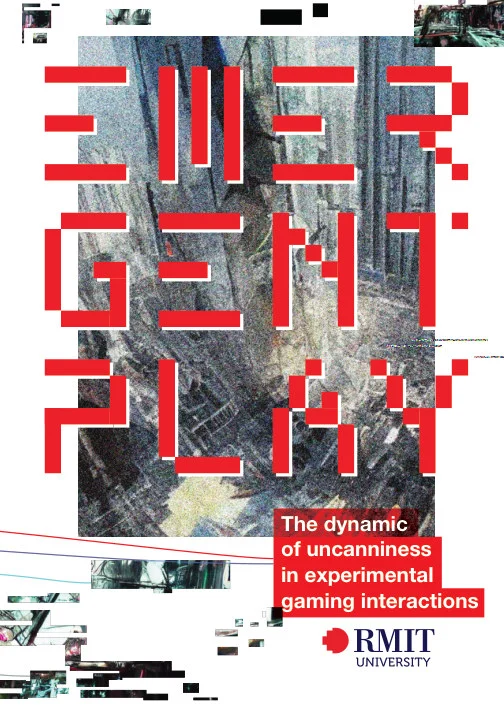
Based on “Emergent Play: The dynamic of uncanniness in experimental gaming interactions.” Supported by the School of Communication and Design Research Seed Fund 2025, RMIT University Vietnam. The published figure caption identifies the work as Nhat Pham Hong, Topology Unknown, AI, 512 × 512 px, 2025.
Background
The AI’s latent space’s “black box” nature and its emergent properties result from the interpolation of many data dimensions, considering algorithmic opacity as a medium in itself, materialising what AI can hide, reveal and process. Such emergent AI hallucination creates uncanniness: the sense of something simultaneously intimate and strange, echoing Freud’s perception of the Unheimlich as a return of the familiar in defamiliarised form that teeters between the known and unknown and challenges interpretations (Bartnæs, 2009). Using play and uncanniness as communication methods and interfaces, this project questions the implications of the triad game designer/player/computer’s agency and challenges the traditional game map/level design principles and processes resulting from such interactions.
Implementation
Topology Unknown is an AI-driven experimental game prototype in which the player takes on the role of an explorer on the AI’s black-box expedition to traverse and map the uncanny, unsolvable multidimensional landscape. Unlike traditional first-person-view games and existing generative game map design, where the map is persistent and constant once generated, Topology Unknown’s world is unstable and abstract, with the player’s controls directly influencing how the AI generates the landscape in real time.
This is achieved by mapping players’ movements to AI’s latent-space walk technique (Schaerf, 2024), driven by AI’s emergent properties. Therefore, the AI landscape will never be the same when viewed from different angles, at different moments or during different play sessions: no two players will experience the same visuals and landscape. We observed that distributed agency, having moved from the designer to a triad designer/player/AI, produces conversational play with further possibilities for researching human-machine connections through playful acts (Kac, 2004). In this context, embracing uncanny affordances as the introduction to the interpretative act of communication, rather than defects, expands possible pedagogical approaches to game aesthetics.
Artist biography
Nhat Pham is a multidisciplinary designer and creative based in Saigon (Ho Chi Minh City), Vietnam. He graduated from Savannah College of Art and Design with an MFA in Graphic Design and Visual Experience. With a background in design and advertising, he works across graphic design, branding, spatial and experiential design, audio-visual production, conceptual design, creative coding and 3D. He engages critically with new technology, including AI, to explore its potential, pitfalls and use as an ethical creative medium.
References
- Bartnæs, M. (2009). Freud’s “The Uncanny” and Deconstructive Criticism: Intellectual Uncertainty and Delicacy of Perception. English Studies, 12(1), 29–54.
- Kac, E. (2004). “Negotiating Meaning: The Dialogic Imagination in Electronic Art.”
- Ping, K., & Dingli, L. (2020). Conditional Convolutional Generative Adversarial Networks Based Interactive Procedural Game Map Generation.
- Schaerf, L. (2024). “Reflections on Disentanglement and the Latent Space.”
- Srivastava, I. (2024). “A comparative analysis of generative models for terrain generation in open-world video games.”
Citation
Pham Hong, N., Kiejziewicz, A., Arce, R., & Lim, K. Y. (2025). Topology Unknown. Single-channel video, 05:05. KOSMA Fall International Invitational Exhibition, Digital Craftsmanship.